
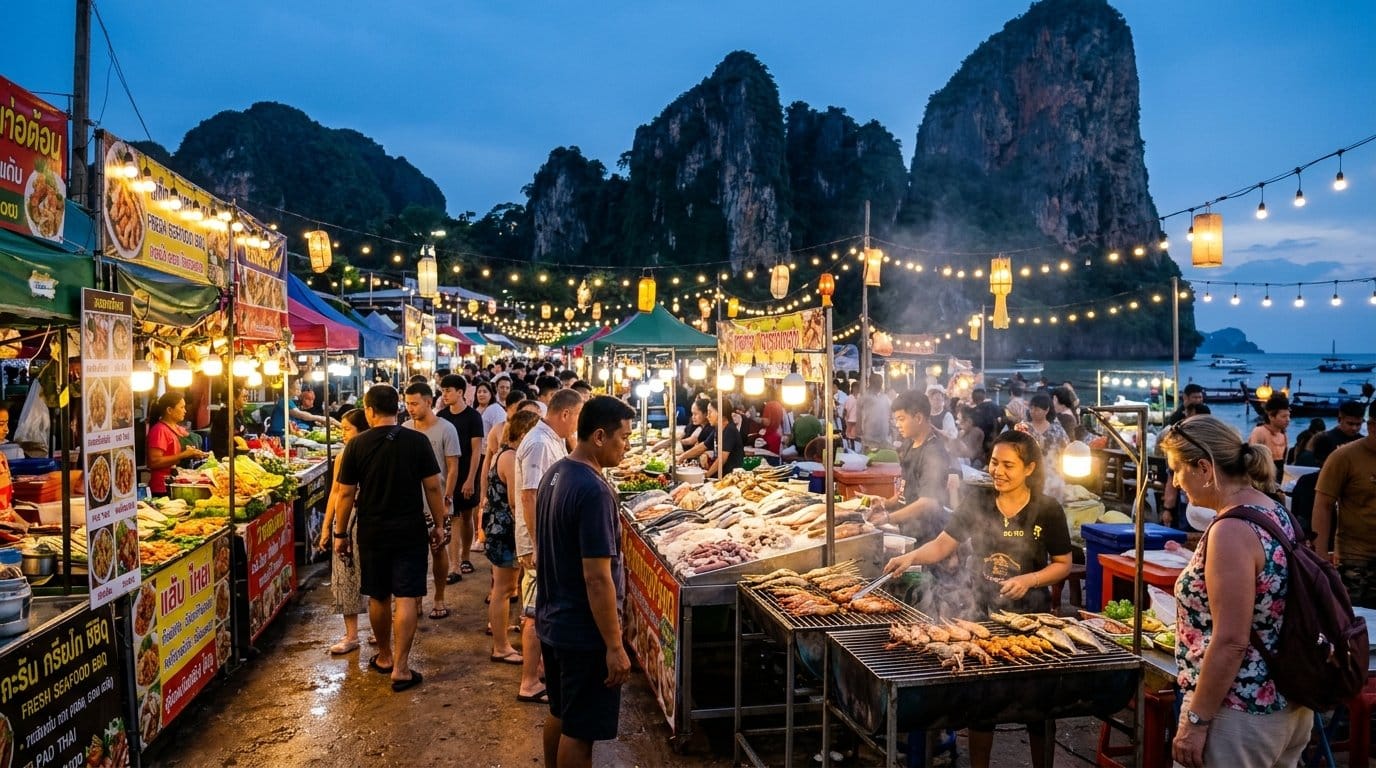
Where to Eat in Krabi, Thailand: A Foodie’s Guide to Local Markets, Seafood Shacks, and Hidden Restaurants
Where to Eat in Krabi, Thailand: Your Honest Foodie Guide
Krabi is famous for its towering limestone karsts, emerald water, and island-hopping adventures. However, it also quietly holds some of the best street food and local dining in southern Thailand. If you’re wondering where to eat in Krabi Thailand — whether you’re staying in Ao Nang, venturing to Railay Beach, or exploring Krabi Town itself — this guide will point you in the right direction.
We’ve put together practical, honest advice rather than a list of tourist traps. So grab a cold Chang and read on.
Start in Krabi Town: Where the Locals Actually Eat
Many visitors base themselves in Ao Nang and never make it to Krabi Town, which is a genuine shame. The town sits about 20 minutes inland from Ao Nang by road, and it’s where you’ll find the most authentic and affordable food in the region.
The Chao Fa Night Market (also known as the Krabi Walking Street) runs on Friday, Saturday, and Sunday evenings along Chao Fa Road. It’s a lively, local affair — vendors sell everything from pad kra pao (basil stir-fry) to fresh coconut ice cream. Prices here are genuinely low, and the atmosphere is relaxed and friendly.
Additionally, the Maharaj Market near the pier is worth an early morning visit. It opens at dawn and is packed with vendors selling khao tom (rice soup), roti with banana and condensed milk, and fresh tropical fruit. It’s the kind of breakfast that costs almost nothing and tastes extraordinary.
What to Order in Krabi Town
Southern Thai cuisine is noticeably different from what you might know from Bangkok. Consequently, it’s worth trying dishes you may not have encountered before. Look out for:
- Gaeng som — a sour, spicy orange curry made with fish and vegetables. It’s sharper and more intensely flavoured than central Thai curries.
- Khao yam — a southern Thai rice salad tossed with dried shrimp, toasted coconut, lemongrass, and a sweet, tangy dressing. It’s light, fragrant, and utterly unique.
- Moo hong — slow-braised pork belly in a sweet soy sauce. You’ll find it served over rice at many local shophouses.
- Satay and roti — street-side roti vendors are everywhere in the south. The flaky, buttery flatbread served with a curry dipping sauce is hard to walk past.
Ao Nang: Eating Well Without Overpaying
Ao Nang is Krabi’s main tourist beach strip, and as a result, food prices here are noticeably higher than in Krabi Town. That said, there are still genuinely good options if you know where to look.
The Ao Nang Night Bazaar runs most evenings along the beachfront road. It’s more tourist-oriented than the Krabi Town walking street, but you’ll still find solid pad thai, grilled prawns, and fresh fruit shakes at reasonable prices. Furthermore, it’s a pleasant place to wander after a day on the water.
For sit-down dining, head one or two streets back from the main beachfront strip. The further you walk from the beach, the more local the restaurants become and the more your baht stretches. Small family-run Thai restaurants tucked into the sois (side streets) often serve better food than the polished beachfront venues at a fraction of the price.
Seafood in Ao Nang
Krabi is a coastal province, so naturally the seafood is excellent. Several open-air seafood restaurants line the road between Ao Nang and Noppharat Thara Beach. You’ll typically choose your fish, prawns, crab, or squid from an iced display at the front, then decide how you’d like it cooked — steamed with lime and garlic, grilled with chilli, or stir-fried with black pepper.
It’s worth asking the price before ordering, particularly for crab and large whole fish, as these are often priced by weight. Overall, however, a generous seafood dinner for two with rice and a couple of beers remains very affordable by international standards.
Railay Beach: Eating With a View (and Managing Expectations)
Railay Beach is only accessible by longtail boat, which means everything — including food — costs a little more than on the mainland. Because of the logistics involved in getting supplies across the water, don’t expect Krabi Town prices here.
That said, there are some genuinely enjoyable places to eat on Railay. The west beach has a handful of beachside restaurants where you can sit with your feet practically in the sand, watch the longtails come and go, and eat a decent Thai green curry or fresh fish. It’s more about the setting than culinary fireworks, but it’s undeniably pleasant.
If you’re heading to Railay for the day — perhaps after a speedboat transfer from Phuket via Bang Rong Pier — it’s worth having lunch there before heading back. Just keep your expectations calibrated: it’s island convenience food with a spectacular backdrop, rather than a destination dining experience.
A Tip for Day-Trippers
If you’re doing a day trip from Phuket or Ao Nang — perhaps a half-day Krabi 4 Islands catamaran cruise or a Hong Island longtail boat tour — most tours include a lunch stop. However, it’s always worth checking exactly what’s included before you book, so there are no surprises on the day.
Learn to Cook It Yourself: Krabi Cooking Classes
One of the most rewarding ways to engage with Krabi’s food culture is to actually learn how to make it. A hands-on cooking class gives you a genuine understanding of the flavour combinations and techniques behind southern Thai cuisine — and, of course, you get to eat everything you cook.
PDC can arrange a Krabi cooking class at Siam Cuisine Thai Cookery School, which is a well-regarded option for travellers who want a proper culinary experience rather than a quick tourist demonstration. It’s a great half-day activity that pairs nicely with an afternoon on the water.
The Ao Nang Seafood Night Market: A Practical Guide
If you’re specifically looking for the best evening food experience in Ao Nang, the seafood night market area near the beach road is your best starting point. Here’s how to make the most of it:
- Arrive early — by 6:00–6:30 pm, before the main tourist rush. You’ll get better seats and fresher choices.
- Walk the whole strip first — before committing to a table, have a look at what’s on offer and compare prices between vendors.
- Order simply — grilled whole fish with a squeeze of lime, a plate of stir-fried morning glory with oyster sauce, and a bowl of tom yum soup is a meal that’s hard to beat anywhere in Thailand.
- Bring cash — many smaller stalls and family restaurants don’t accept cards. Small denomination Thai baht is useful.
Beyond Ao Nang: Exploring Krabi’s Wider Food Scene
If you have more than a couple of days in Krabi, it’s genuinely worth venturing beyond the main tourist corridors. The road north towards Noppharat Thara and the road south towards Klong Muang both have local restaurants and seafood spots that see far fewer tourists and offer notably better value.
Furthermore, if you’re doing an afternoon sunset island tour by speedboat, you’ll often return to the pier around early evening — which is the perfect time to head straight to a local restaurant for dinner while the sun goes down behind the karsts.
For those combining Krabi with a broader southern Thailand itinerary, PDC covers tours and packages across the Krabi region, so you can build your days around both the food and the islands.
How Phuket Dream Company Can Help With Dining in Krabi
Phuket Dream Company’s team has on-the-ground knowledge of the Krabi region, not just the main tourist spots. If you’d like personalised restaurant recommendations based on your location, budget, dietary requirements, or the kind of experience you’re after, simply get in touch with the team via WhatsApp.
PDC can also assist with restaurant bookings for special occasions — a birthday dinner, an anniversary meal, or a private dining experience. While the specifics depend on availability and your requirements, the team handles the legwork so you don’t have to navigate it yourself in an unfamiliar destination.
A Few Final Tips for Eating Well in Krabi
Before you go, here are a few practical notes worth keeping in mind:
- Spice levels — southern Thai food is genuinely spicy by default. If you’re sensitive to chilli, it’s worth saying “pet nit noi” (a little spicy) when you order. Most restaurants are happy to adjust.
- Vegetarian options — vegetarian food is available throughout Krabi, particularly in Ao Nang and Krabi Town. However, fish sauce often appears in dishes that might seem vegetarian, so it’s worth asking specifically if this is important to you.
- Water — tap water in Thailand is not safe to drink. Bottled water is inexpensive and widely available. Most restaurants will bring a bottle or jug automatically.
- Timing — Thai restaurants, especially local ones, often open early for breakfast and lunch, then close in the afternoon before reopening for dinner. If you arrive between 2:00 and 5:00 pm, you may find some places shut.
Ultimately, knowing where to eat in Krabi Thailand comes down to being willing to wander a little off the main strip and eat where the locals eat. The food rewards are significant, and the prices will make you very happy indeed.