
Ethical Elephant Sanctuary Phuket: What to Look For (and What to Avoid)
Why Your Choice of Elephant Experience Actually Matters
Elephants are one of Thailand’s most iconic animals, and for many visitors, meeting one is a genuine bucket-list moment. However, not every venue offering elephant encounters operates with the animals’ welfare in mind. Choosing an ethical elephant sanctuary Phuket — rather than a traditional riding camp — makes a real difference to the lives of these animals.
The good news is that awareness is growing fast. More sanctuaries across Phuket and southern Thailand are moving toward genuinely enrichment-focused care. With a little knowledge, it’s straightforward to tell them apart from the exploitative alternatives.
The Red Flags: What an Unethical Venue Looks Like
Before exploring what a good sanctuary offers, it helps to know what to avoid. Some warning signs are obvious; others are more subtle.
Elephant Riding
This is the clearest red flag of all. Elephants are not physically built to carry people on their backs, particularly using hard wooden howdahs (saddle platforms). Furthermore, the training methods historically used to make elephants accept riders — a process called phajaan — involve significant psychological and physical harm. If a venue offers riding, it is not an ethical sanctuary, regardless of how it markets itself.
Performances and Tricks
Elephants that paint pictures, play instruments, or perform choreographed shows have almost always been trained through fear and repetition. Consequently, any venue centred on elephant performances should be avoided.
Chains and Concrete
An elephant that spends most of its day chained on concrete has no opportunity for natural behaviour. Healthy sanctuaries prioritise space, soft ground, mud pools, and natural vegetation — not photo-opportunity staging areas.
Very Short “Interactions”
Fifteen-minute “selfie sessions” with elephants are typically a sign that volume of visitors, rather than animal welfare, is the priority. Ethical venues limit group sizes and allow time for genuine, unhurried interaction.
What a Genuine Ethical Elephant Sanctuary Phuket Looks Like
Thankfully, the contrast with a good sanctuary is striking. Once you know what to look for, the difference becomes very clear.
No Riding, No Hooks
Reputable sanctuaries have a firm no-riding policy. Guides do not use bullhooks (metal goads) to control the elephants. Instead, mahouts — the traditional elephant caretakers — use voice commands and positive reinforcement built over years of relationship-building.
Natural Habitat and Freedom of Movement
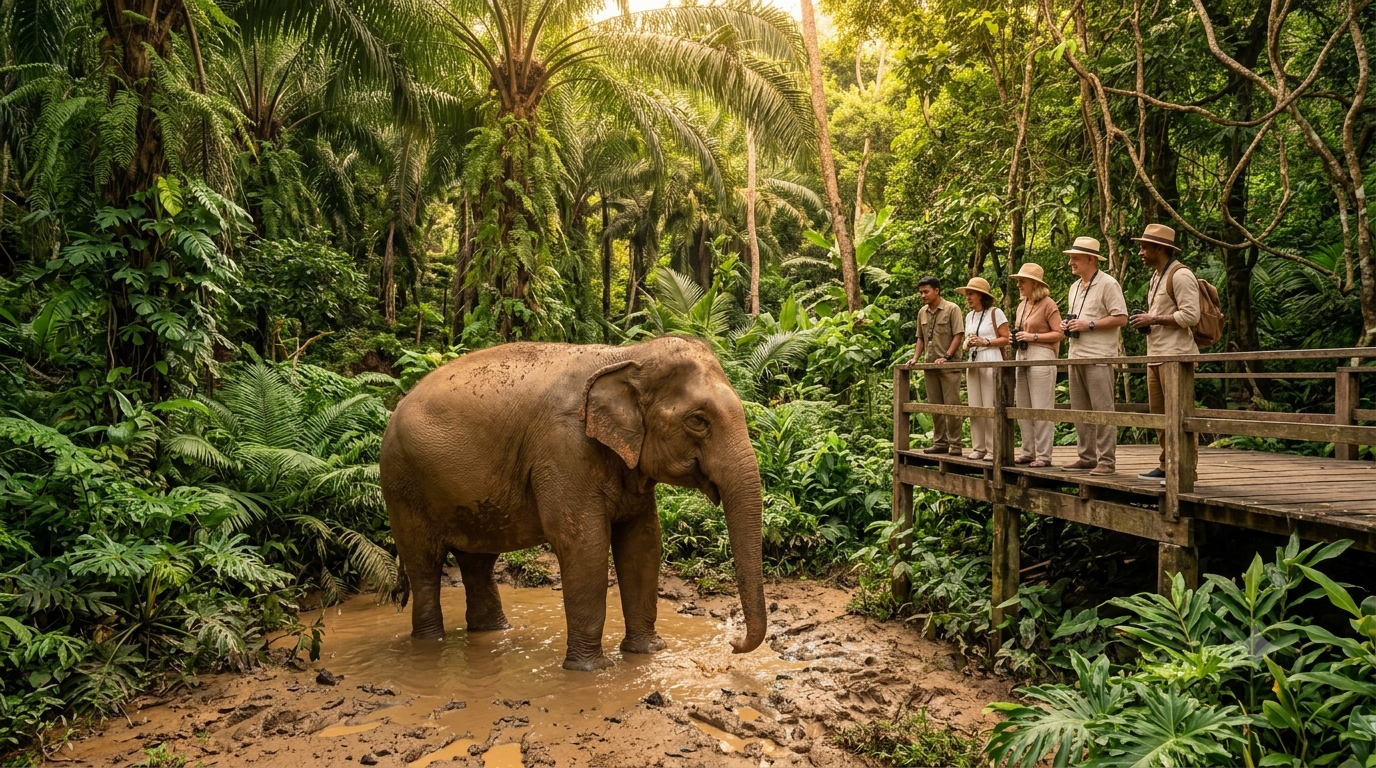
Good sanctuaries give elephants access to forested land, rivers or streams, and mud wallows. Mud, in particular, is essential — it protects their skin from sunburn and insects. Therefore, a venue with a proper mud pool is generally a positive sign.
Enrichment-Focused Care
Enrichment means keeping elephants mentally and physically stimulated in ways that mirror their natural behaviour. This includes foraging for food across a large area, socialising with other elephants, and bathing freely. Notably, the best sanctuaries allow elephants to approach visitors on their own terms, rather than forcing interaction.
Small Groups and Guided Education
Ethical venues typically cap group sizes to reduce stress on the animals. Additionally, knowledgeable guides take time to explain each elephant’s individual history — many have been rescued from logging, street begging, or riding camps — which adds meaningful context to the visit.
What You Can Actually Do at an Ethical Sanctuary
A visit to a reputable ethical elephant sanctuary in Phuket or the surrounding region is genuinely memorable — and you won’t feel like you’ve compromised your values to enjoy it.
Typically, you’ll have the opportunity to feed the elephants fresh fruit and sugar cane. After that, you’ll often join the mahouts in giving the elephants a supervised bath in a river or pool, which the elephants clearly enjoy. Some sanctuaries also include a mud spa session, where guests and elephants get equally muddy together — it’s usually a highlight of the whole trip.
Moreover, most visits include time simply observing the elephants as they roam, forage, and interact with each other. This unstructured time is often what guests remember most. It’s quiet, unhurried, and surprisingly moving.
Elephant Experiences PDC Recommends Across the Region
At Phuket Dream Company, we have a firm policy of working only with operators who meet ethical standards. We do not work with Tiger Kingdom or any venue that uses riding, hooks, or performance-based training. This isn’t just a marketing position — it’s a condition of how we select our supplier partners.
If you’re interested in combining an elephant sanctuary visit with other activities, our Day Trip River White Water Rafting + ATV + Elephant Bathing near Phuket pairs an elephant bathing experience with rafting and ATV — a popular full-day adventure option.
Over in Krabi, our Krabi Elephant Care + Emerald Pool and Hot Spring tour combines ethical elephant interaction with two of Krabi’s most beautiful natural sites. It’s a particularly well-rounded day out for those based in or visiting the Krabi area.
On Koh Samui, we offer two options depending on your preference. The Sightseeing Koh Samui Elephant Sanctuary and Jungle Tour includes a 4WD jungle component alongside the elephant experience. Alternatively, the Half Day Samui Tour — Feed and Shower Elephant is a more focused half-day experience ideal if you’re short on time.
For broader context on responsible land-based activities around Phuket, our Ultimate Guide to Ethical Land Tours in Phuket (2025) is worth a read before you finalise your itinerary.
Questions to Ask Before You Book Any Elephant Experience
Regardless of who you book through, it’s worth asking a few direct questions before committing to any elephant venue:
- Is elephant riding available at this venue? (The answer should be no.)
- How many elephants are at the sanctuary, and what is the maximum group size per visit?
- Where did the elephants come from, and what is their background?
- Do the elephants have access to natural land, water, and mud?
- Are bullhooks used by any of the mahouts?
A reputable operator — and a reputable DMC — will answer these questions confidently and transparently. If the response is evasive, that tells you something important.
Ready to Plan Your Ethical Elephant Experience?
Finding a genuinely ethical elephant sanctuary in Phuket or southern Thailand doesn’t require hours of research when you have the right team on your side. PDC’s local knowledge means we can match you with the right venue for your group size, location, and schedule — without you having to sift through misleading marketing.
Get in touch with the PDC team directly via WhatsApp to discuss options, or browse our full range of tours to start planning your Thailand itinerary. We’re available seven days a week and genuinely happy to help you make the right choice — for you and for the elephants.